
Retail data corruption is almost never one dramatic event. It is a null where a product ID should be, a sale that commits the invoice line but not the stock deduction, or two tills posting movements for the same item in the same second under different rules. None of those announce themselves. They surface a week later, when the report and the till disagree and nobody can say which one is lying.
That is the expensive part. Not the bad row, the lost confidence: 75% of data leaders say they do not trust their data enough to base strategic decisions on it. A retail floor reaches that state quietly, one almost-correct record at a time.
Source: Improvado, enterprise data management
Key takeaways
| The SQL feature | What it prevents | Why it matters on a South African floor |
|---|---|---|
| Constraints (keys, checks, not null) | Invalid rows and broken relationships | Stock movement stays clean across every till and every branch |
| Transactions and ACID | Half-written sales during peak checkout | End-of-day totals hold up when the queue is longest |
| Isolation levels | Dirty reads, double-selling, phantom rows | Many tills post at once without fighting each other |
Why corruption-free matters more in 2026
A point-of-sale system stopped being a front-of-house screen some time ago. A single sale now touches a handheld terminal, a self-service kiosk, a kitchen display, a stock ledger and a sync job to head office. Each of those is a chance for the record to arrive incomplete.
When the backbone is strict, that spread is fine. When it is not, the reports start disagreeing with the tills, and the disagreement compounds. This is why TimeWorks runs on Microsoft SQL rather than a simplified store-and-forward layer: the database itself refuses the bad write, rather than a cleanup job finding it afterwards.
It reads like a software choice. It is closer to a structural one.
1. Constraints: stop the bad row before it exists
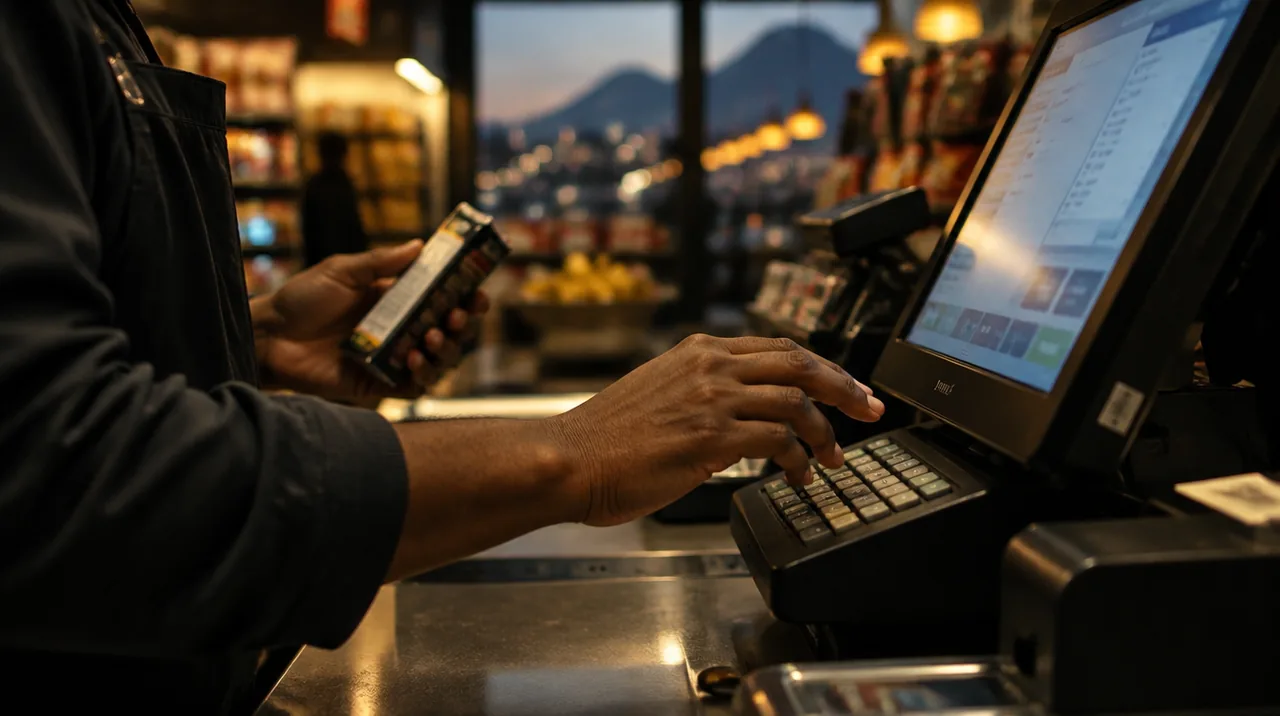
Constraints are the quiet layer. You define the rules once, SQL enforces them on every write, and an operator working normally never gets the chance to create a corrupt record in the first place.
- Primary keys on products, tills, staff, invoices and stock movements, so no two things share an identity.
- Foreign keys so an invoice line cannot reference a product or a price list that does not exist.
- NOT NULL on the columns a report cannot survive without: quantity, unit price, document number.
- CHECK constraints for ranges, so a sale line cannot carry a negative quantity and a tax rate cannot fall outside what SARS allows.
- Unique constraints so a till that reconnects and resends does not post the same transaction twice.
That last one earns its place on a load-shedding schedule. A terminal that drops mid-sale and comes back will re-send; without a unique constraint, the reconnect is indistinguishable from a second sale.
With constraints in place, bad data becomes a rejected write rather than a corrupted record. That is the whole difference between a system that protects itself and one that only discovers the damage later.
2. Transactions and ACID: all of it, or none of it
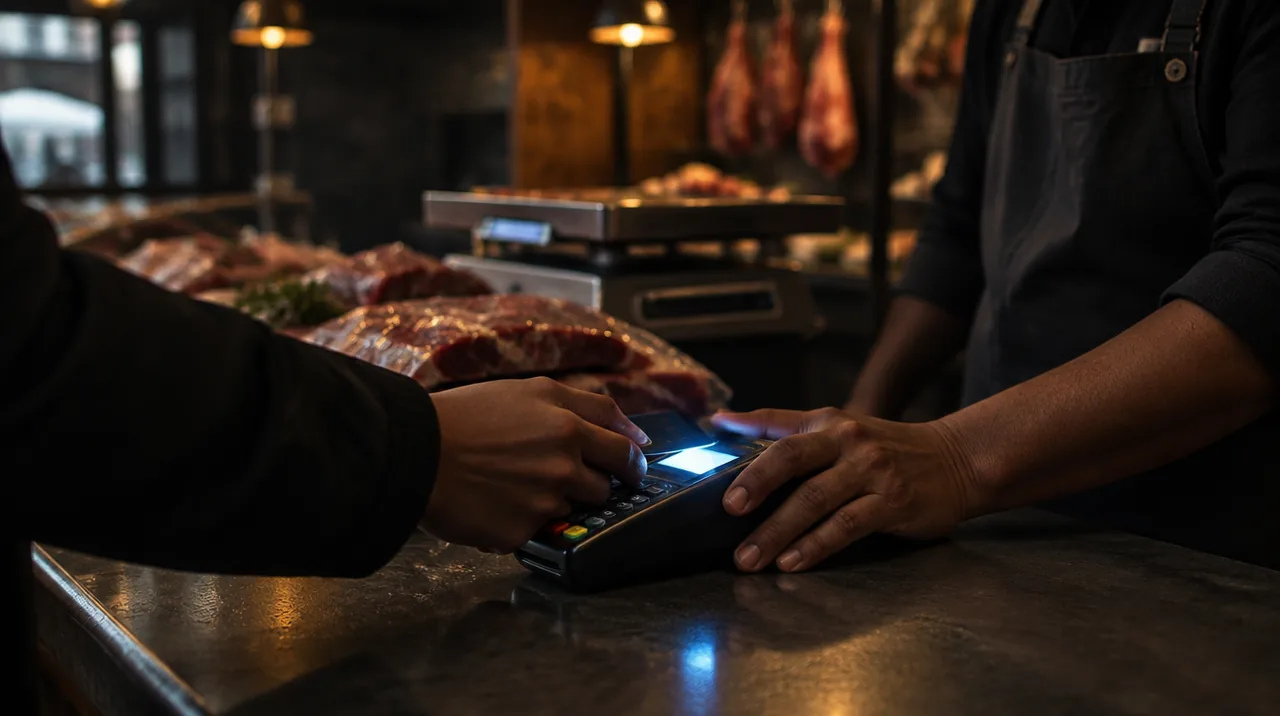
One retail sale is not one write. It is an invoice header, a set of line items, a stock deduction, a pricing snapshot, sometimes loyalty points, sometimes a kitchen display entry. Six writes wearing the coat of a single action.
A transaction binds them. Either all six happen or none of them do, and there is no state in between that anyone can read.
- Atomicity — the full set commits, or the database rolls back to before it started.
- Consistency — every constraint above still holds at the end of it.
- Isolation — a half-finished sale is invisible to every other till until it is done.
- Durability — once it is committed it survives the power going out, which on this grid is not a hypothetical.
Without this, the worst moment of the day builds the worst data of the day. Peak checkout is exactly when writes overlap, when a terminal is most likely to drop, and when nobody has time to notice that a stock figure moved and an invoice did not.
3. Isolation levels: two tills, one row

Two cashiers reach for the same stock row in the same second. Whether that ends in a correct count or a double-sale is decided by the isolation level, and by nothing else.
- Dirty reads — one till reads a figure another till has written but not committed, and acts on a number that is about to be rolled back.
- Double-selling — both tills read the same "1 remaining" and both sell it.
- Phantom rows — a report runs while inserts are landing, and reads a set that never existed at any single moment.
The answer is not to lock everything down. Maximum isolation is also maximum queueing, and a till that waits is a queue that grows. The work is choosing the level per operation: strict where money and stock move, relaxed where a background report can tolerate a slightly stale read.
80% of data governance initiatives fail without the automation to hold them up under operational pressure. Isolation levels are where that shows: a policy nobody tuned becomes a policy the floor works around.
Source: DreamFactory, enterprise data integration statistics
What this looks like in a Cape Town deployment
The three features above are not a checklist we hand over. They are decisions made per table and per operation, before the first till goes in.
- A butchery running scale integration needs CHECK constraints on weight-based line items that a clothing retailer never thinks about.
- A restaurant group needs isolation tuned around the kitchen display, where a stale read is a plate that never gets made.
- A multi-branch retailer needs unique constraints that survive a branch trading offline for four hours and then syncing everything at once.
The local database enforces all of it while the connection is down, which is the part that matters here. If the terminal keeps selling through an outage and the rules only live at head office, the sync is not a sync. It is a cleanup.
Frequently asked questions
Does a cloud POS not handle this already?
Some do. The question to ask is where the rules live. If constraints and transactions are enforced only at the central database, then anything the terminal writes while offline is unvalidated until it reconnects, and the reconnect becomes the risky moment rather than the safe one.
Do constraints slow the tills down?
Not measurably at retail volumes. A constraint check is an index lookup. The thing that slows tills down is over-strict isolation, which is a separate setting and a tunable one.
What happens to a sale interrupted by load-shedding?
If it was inside a transaction, it rolls back and never existed. The operator rings it up again on the UPS or on the next terminal. What must not happen is a sale that half-committed, because that is the one nobody finds until the count.
Can this be retrofitted to a system already running?
Constraints can be added to a live database, but existing rows have to pass them first, and that is the real work: finding what is already wrong before the rule can be switched on. It is easier to start strict.