
Rent or buy? It is one of the most common questions we get from business owners exploring a POS upgrade. And unlike most binary choices, there is no universally correct answer. The right decision depends on where your business is right now: your cash flow, your growth trajectory, and how long you plan to keep the same setup.
Over the past decade, POS rental has become an increasingly mainstream option in South Africa, particularly as hardware costs have risen and business conditions have become less predictable. At the same time, purchasing still makes excellent financial sense for the right operator. This article breaks down both paths and introduces a third option that sits squarely in the middle.
The Case for Purchasing
Buying your POS hardware outright remains the most straightforward path to ownership. You pay once, the equipment is yours, and there are no ongoing rental obligations. For an established business with available capital, the long-term numbers usually favour a purchase.
From an accounting perspective, purchased hardware sits on your balance sheet as a fixed asset. That means you can depreciate it over its useful life, typically three to five years, reducing your taxable income annually. This SARS-recognised deduction is a meaningful benefit for businesses with healthy profit margins.
The TimeWorks hardware shop offers individual peripherals from R685 for a barcode scanner up to R1,895 for a receipt printer, with touch-screen terminals, cash drawers, and customer display units in between. A complete single-station setup can be assembled for well under R10,000: a one-time cost that pays for itself within a year or two compared to equivalent rental fees.
Purchasing is most appropriate for: established businesses with consistent revenue, single-location operators who have found a stable POS configuration, and owners who prefer clean, predictable operating costs with no monthly commitments.
The Case for Renting
POS rental has matured significantly. It is no longer a fallback option for businesses that cannot afford to buy. It is a deliberate, strategic choice for operators who value flexibility, minimal upfront exposure, and built-in support.
The primary advantage is access without capital outlay. Rather than locking R20,000 to R50,000 into hardware on day one, you preserve that working capital for stock, staff, marketing, or contingency. This matters enormously in the first 12-18 months of a new business when cash flow is most unpredictable.
TimeWorks rental starts from R995 per month excluding VAT, with daily and event rental priced on request, and a straightforward approval process that takes no longer than 72 hours. Critically, no bank or credit approval is required: an important detail for newer businesses or those that do not yet have an established credit history. TimeWorks has been operating a rental programme for over 10 years, which means the logistics, support model, and hardware lifecycle management are well-established.
Rental agreements typically include maintenance and swap-out provisions. If hardware fails, it is replaced. You are not waiting on a repair quote or spending unbudgeted money to get back online. This matters particularly in high-volume environments where downtime directly costs sales.
Renting is most appropriate for: new businesses, seasonal operators, vendors at events and festivals, franchise owners expanding into new locations, and any business where volume or format may change significantly within the next 12 months.
Rent-to-Own: The Middle Ground
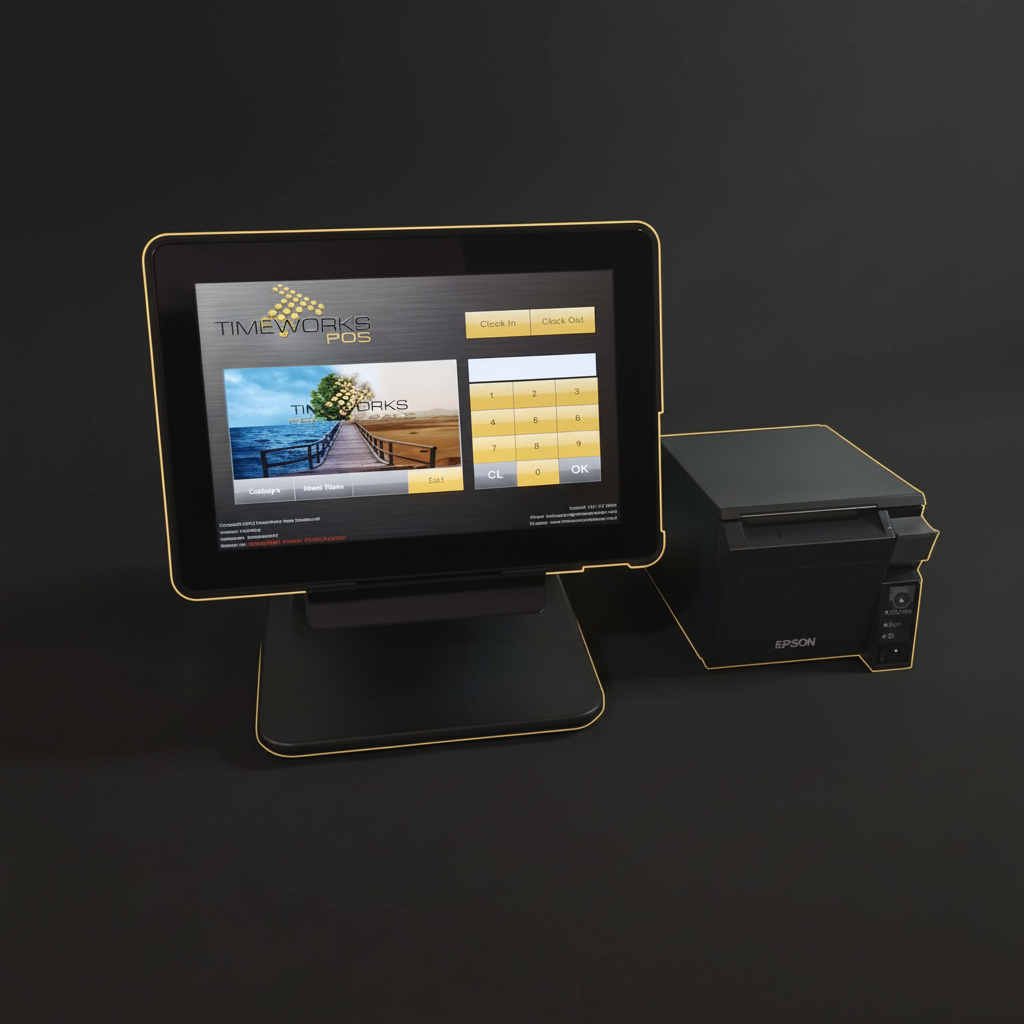
Not every business fits neatly into the rent-or-buy binary. For operators who want the flexibility of rental today with the goal of eventual ownership, TimeWorks offers a rent-to-own structure where your monthly payments contribute toward the purchase price of the hardware.
This approach is particularly well-suited to businesses that are growing but not yet at the stage where a large capital purchase is prudent. You get the equipment immediately, continue operating under a rental-style agreement with maintenance included, and reach a point (typically 18 to 36 months depending on the arrangement) where the hardware becomes yours at little or no additional cost.
Rent-to-own also smooths the psychological barrier of commitment. You are not locked into hardware you may outgrow, but you are also building toward ownership rather than paying indefinitely with nothing to show for it.
Side-by-Side Comparison
| Factor | Purchase | Rental | Rent-to-Own |
|---|---|---|---|
| Upfront Cost | High (R10k-R50k+) | None / deposit only | Low (first month) |
| Monthly Cost | None after purchase | From R995/month excl. VAT | Fixed repayment |
| Maintenance | Owner's responsibility | Included | Included during term |
| Upgrade Path | Sell & replace | Swap anytime | Upgrade at end of term |
| Ownership Timeline | Immediate | Never (rental asset) | 18-36 months |
| Tax Treatment | Depreciation (asset) | Operating expense | Hybrid (check with accountant) |
| Credit Requirement | Own capital | No bank approval | Basic qualification |
| Best For | Established operators | Startups & seasonal | Growing businesses |
5 Scenarios Where Renting Makes Clear Sense
New Business
You are in month one to twelve. Revenue is building, costs need to be variable, and you cannot afford to lock up capital in hardware that might need to change as your format evolves.
Events & Seasonal Operations
You trade at festivals, markets, or seasonal venues. You need a full POS setup for six weeks and nothing for the rest of the year. Rental eliminates idle hardware sitting in a storeroom.
Testing a New Location
You are piloting a pop-up or second branch before committing fully. Rental lets you operate a complete POS environment without a purchase commitment on an untested site.
Load Shedding or Equipment Failure
Your existing hardware was damaged and you cannot wait weeks for a repair. Rental provides an immediate working replacement within hours, not days.
Franchise Expansion
You are rolling out new franchise sites rapidly. Rental allows each site to go live quickly and uniformly without requiring each franchisee to source and purchase hardware independently.
4 Scenarios Where Purchasing Makes Clear Sense
Established Single Location
You have been trading for two or more years at the same site, your POS needs are well-understood, and you have capital available. Purchasing eliminates all monthly hardware obligations.
Tax Asset Strategy
You are in a high-income period and want legitimate deductions. Purchasing hardware as a depreciating fixed asset gives you SARS-recognised write-downs over three to five years.
Long-Term Operational Stability
Your business model is unlikely to change significantly in the next five years. You want zero variables in your cost structure and full control over your hardware environment.
Bulk Multi-Site Deployment
You are equipping five or more sites simultaneously. Bulk purchase pricing, combined with your own IT infrastructure, often makes outright ownership the most cost-efficient path at scale.
Quick rule of thumb: If you are asking "can I afford to buy?": consider renting. If you are asking "is buying cheaper in the long run?" the answer is almost always yes, but only if your setup is stable. When in doubt, rent-to-own bridges the gap.
The Bottom Line
There is no wrong answer here, only the right fit for your specific business at this specific moment. A coffee cart at a weekend market has entirely different needs from a 200-seat restaurant that has been running the same POS for five years. Both are legitimate operations, and both deserve a hardware strategy that serves them rather than constrains them.
The best first step is a conversation. TimeWorks has been navigating this decision with South African business owners for over 25 years. Purchase, rental or the rent-to-own middle path — the team can model out the real costs based on your volume, trading pattern, and capital position, and recommend the option that actually makes sense for your situation.
Not Sure Which Option Fits?
Speak to a TimeWorks consultant. We will walk you through the numbers based on your specific business and help you choose the right path. No obligation.