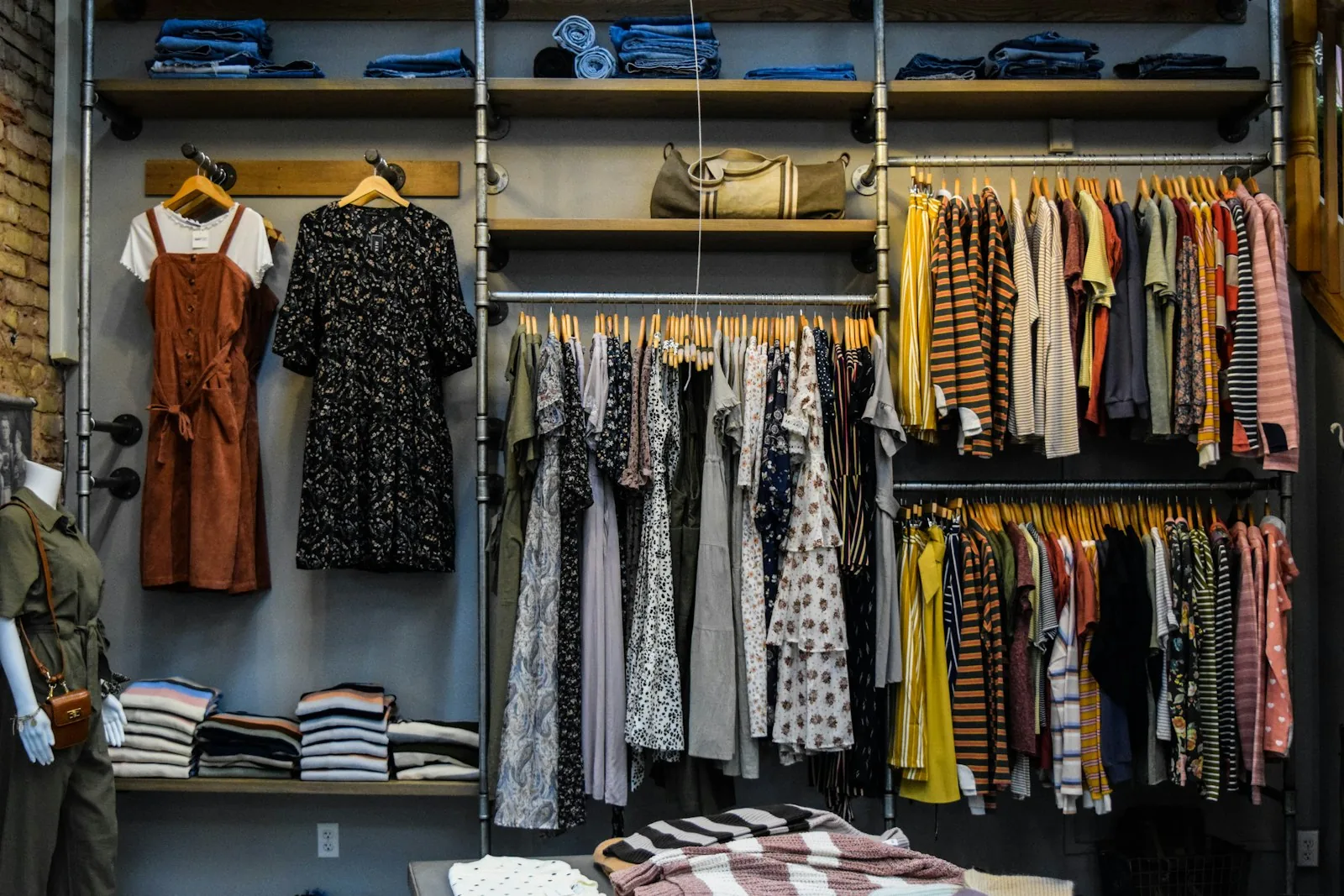
Clothing Store POS System
for Multiple Tills.
The best POS for a clothing retailer with multiple tills keeps one live stock count that every till reads, gives every size and colour its own barcode, and lets any till take a layby, a return or an exchange. A TimeWorks clothing store POS system does this on a Microsoft SQL database in your store, so every till keeps trading offline, with rental from R995 per month excluding VAT covering hardware, software and support.
Best POS for a Clothing Retailer
with Multiple Tills
The best POS for a clothing retailer with multiple tills is one where every till works from the same stock count, the same customer records and the same layby book. Sell the last medium blue linen dress at the front till and the till at the fitting rooms knows straight away. A clothing store POS system that keeps a separate list on each till will sell that dress twice, lose a layby, or refuse a return because the sale happened on another till.
Start with one shared stock count. TimeWorks keeps sales, stock, laybys and customers on one Microsoft SQL database in your store, and every till reads and writes to it. A sale at any till deducts the exact size and colour sold, so the stock report, the next till and head office all see the same number. If you have more than one branch, each branch's tills sync to a central database, and stock transfers between branches are tracked as inter-branch movements. See how the multi-site retail inventory side works.
Then give every variant its own barcode. GTIN stands for Global Trade Item Number, the number under the barcode, and GS1 South Africa is licensed to create GTINs for Africa and is the only registered provider in the SADC countries. GS1 South Africa states that each product variation needs its own GTIN, where variations means each size, each colour and each combination of sizes and colours. A one-size T-shirt in three colours is three GTINs. If all three share one number, you cannot tell which colour you sold. TimeWorks stores each variant under one style code with its own barcode, so a scan at any till deducts the right size and colour. Supplier barcodes scan as they arrive. For your own labels, print EAN-13 or Code 128 barcodes on a Zebra or TSC barcode label printer for swing tags, and read them with a Zebra LI2208 scanner, which reads EAN-13, Code 128 and UPC-A and comes with a hands-free stand.
Laybys have to work at every till, because South African law treats layby money as the customer's. Section 62 of the Consumer Protection Act 68 of 2008 says that each amount a customer pays on a layby remains the customer's property until the goods are delivered, and the goods stay at your risk until then. If the customer cancels, or does not finish paying within 60 business days after the agreed completion date, you may charge a cancellation penalty only if you told the customer about it before the layby started, and you must refund the rest. If you cannot hand over the goods once they are paid for, the customer chooses between equivalent goods and a refund, and that refund can be double what they paid. So a layby must reserve the exact garment in the shared stock count, so that no other till can sell it, and any till must be able to take the next payment against the layby number.
Returns and exchanges come back to whichever till is free. Under section 56 of the same Act, a customer may return defective goods within six months of delivery, and you must repair, replace or refund at the customer's choice. Because every till reads the same sales record, the till that takes the return finds the original sale, puts the item back into stock at its exact size and colour, and records the refund or exchange.
Cash-up is per cashier. Each cashier signs in with their own PIN, so every sale belongs to someone. At the end of a shift, the cash-up compares the expected cash from the transaction log with the counted till and records any difference. End-of-day sales summaries and staff transaction breakdowns can be emailed to you automatically. SARS levies VAT at the standard rate of 15%, and from 1 April 2026 the compulsory VAT registration threshold rose from R1 million to R2.3 million. On TimeWorks, the VAT on every slip comes from the product record, never from the cashier.
Keep every till trading when the power or the internet drops. Eskom ended winter 2025 with 26 hours of load shedding across four evenings, supplying electricity 97% of the time, but a Saturday queue at three tills still stops if each till needs the internet for every sale. TimeWorks tills keep processing sales locally and sync to the central database when the connection is back.
Finally, cost. The Cloud-Based Entry POS is R350 per month excluding VAT, for up to two users (a manager and a cashier). A store with several tills and several cashiers needs the Full Business Solution at R500 per month excluding VAT, which has unlimited users and advanced stock control. Both are on our POS software plans page. Or rent the full setup, hardware, software and support included, month to month from R995 per month excluding VAT, with a terminal and printer included, and daily rental is contact for pricing. Weighing up Lightspeed for a clothing store? Read our TimeWorks vs Lightspeed comparison.
| What every till needs | Why it matters in a South African clothing store | How TimeWorks does it |
|---|---|---|
| One stock count | Two tills selling from two lists will sell the last size twice. | One SQL database in the store; every till reads and writes to it. |
| A barcode per size and colour | Each size, each colour and each combination needs its own GTIN (GS1 South Africa). | Variants under one style code, each with its own barcode. |
| Layby at any till | Layby payments stay the customer's money until delivery (CPA section 62). | The garment is reserved in stock; any till takes the next payment. |
| Returns at any till | Defective goods can come back within six months (CPA section 56). | Any till finds the original sale and restocks the exact variant. |
| Cash-up per cashier | VAT at 15% on every slip (SARS). | PIN sign-in, and an end-of-shift cash-up with the variance recorded. |
| Offline trading | A till that needs the internet for every sale stops when the line drops. | Sales process locally and sync when the connection returns. |
Selling more than clothing? A salon and beauty POS bills services and retail products on one slip, and our retail POS hardware guide covers scanners, printers and cash drawers for each till.
Every Size, Colour and Layby,
on Every Till
The six things a clothing POS system has to do well, whichever till the customer walks up to.
Size and Colour Matrix
Every clothing item is stored with its full size run and colour variants as individual stock-keeping units under a single style code. Scan any variant's barcode and the POS deducts the exact size and colour sold. Stock reports show which sizes are running low per style, so you can reorder the two remaining mediums in a popular dress without waiting for a full stocktake to reveal the gap.
Layby Management
Process layby agreements at the point of sale with configurable deposit requirements, payment schedules, and expiry dates. The system tracks each customer's outstanding balance, logs every instalment payment, and flags a layby when a payment is overdue or the agreement reaches its expiry date. Layby items are reserved in stock and removed from the available quantity so they cannot be accidentally sold to another customer.
Barcode and Tag Scanning
Scan manufacturer barcodes, print and scan your own label barcodes, or use the style-search function for untagged items. The POS shows the other sizes in the same colour and the stock level of each size at the point of scan, giving your sales staff the information to assist customers without leaving the counter to check the stockroom.
Customer Purchase History
Build customer profiles that record purchase history, preferred brands, sizes, and spending patterns. Use this data to notify loyal customers when a favourite brand restocks or a new season range arrives. Birthday promotions, spend-threshold vouchers, and referral rewards are all configurable within the loyalty module and apply automatically at the point of sale when the customer is identified.
Seasonal Markdowns and Promotions
Apply end-of-season markdown percentages across an entire style or only to specific sizes without repricing each item individually. Promotional periods activate and deactivate automatically at the configured date and time. Clearance pricing rules can target only overstocked sizes, for example applying 40% off any size XS or XXL that has been in stock for more than 90 days, freeing up cash and floor space for new stock.
Style Performance Reporting
Identify your top-performing styles, brands, and categories by units sold, revenue, and margin. Compare sell-through rates by size to inform future buying decisions. End-of-season reports show which styles should be reordered at volume and which should be bought more conservatively, helping you reduce overstock write-offs and improve your open-to-buy accuracy for the next range.
Built for
South African business.
A clothing store with several tills needs the size matrix, laybys and returns built into the POS, not added on later. TimeWorks has done this in South Africa since 1999, with rand pricing and local support.
Size-Level Stock Accuracy
On our clothing-focused POS, every variant matters. Size and colour matrix stock tracking keeps variant-level stock under a single style code, and barcode scanning ties the till to the exact product your customer picked.
Laybys Done by the Book
Formal layby agreements with a deposit, a payment schedule, an expiry date and the cancellation penalty shown up front, as the Consumer Protection Act requires, so you make the sale without giving credit.
Smarter Buying Decisions
Style and size-level sell-through data from the previous season tells you exactly which lines to reorder, which to cut, and where your sizing curve sits relative to your customer base.
Rental Options Available
No large capital outlay required. Monthly rental is from R995 per month excluding VAT, month to month, with a terminal, printer, software and support included and a swap-out warranty. Daily rental is contact for pricing.
Clothing Store POS Questions
Questions clothing store owners and retail managers ask us.
Ready to Upgrade Your Clothing Store POS?
Talk to an Expert.
Talk to a TimeWorks specialist about size matrix tracking, laybys across several tills, and multi-branch setup. Rental and purchase options with full training and support.