
In 2026, premature bumping costs an average of 2-3 times the original food cost. That single figure is why we focus on the four kitchen display metrics that reveal service bottlenecks. When throughput stalls, every delay compounds across the front-of-house and back-office, siphoning margin and customer satisfaction. The backbone here is a reliable, properly configured KDS and POS ecosystem that stays online when it counts.
Key takeaways
| What it means for your operation | Why it matters |
|---|---|
| Speed of order routing from till to KDS | Reduces docket chaos and improves first-time accuracy, with measurable gains in table turn and window timing. |
| On-time performance within peak windows | Small improvements compound into higher revenue and better guest experiences during busy periods. |
| Order accuracy and error rates | Fewer remakes cut waste, improve ticket times, and protect margins across all formats, from bottle stores to wine estates. |
| Utilization of the kitchen display system | High utilization reveals bottlenecks in staffing and routing; it signals when you need a tighter rollout plan or hardware upgrade. |
| Impact by venue type | Different service models show distinct bottlenecks; this informs a targeted, best-fit rollout plan. |
If you run a POS system in Cape Town or operate a retail outlet in a wine estate, these four metrics apply across verticals. See how TimeWorks aligns with KDS and digital signage for a tighter front-to-back workflow.
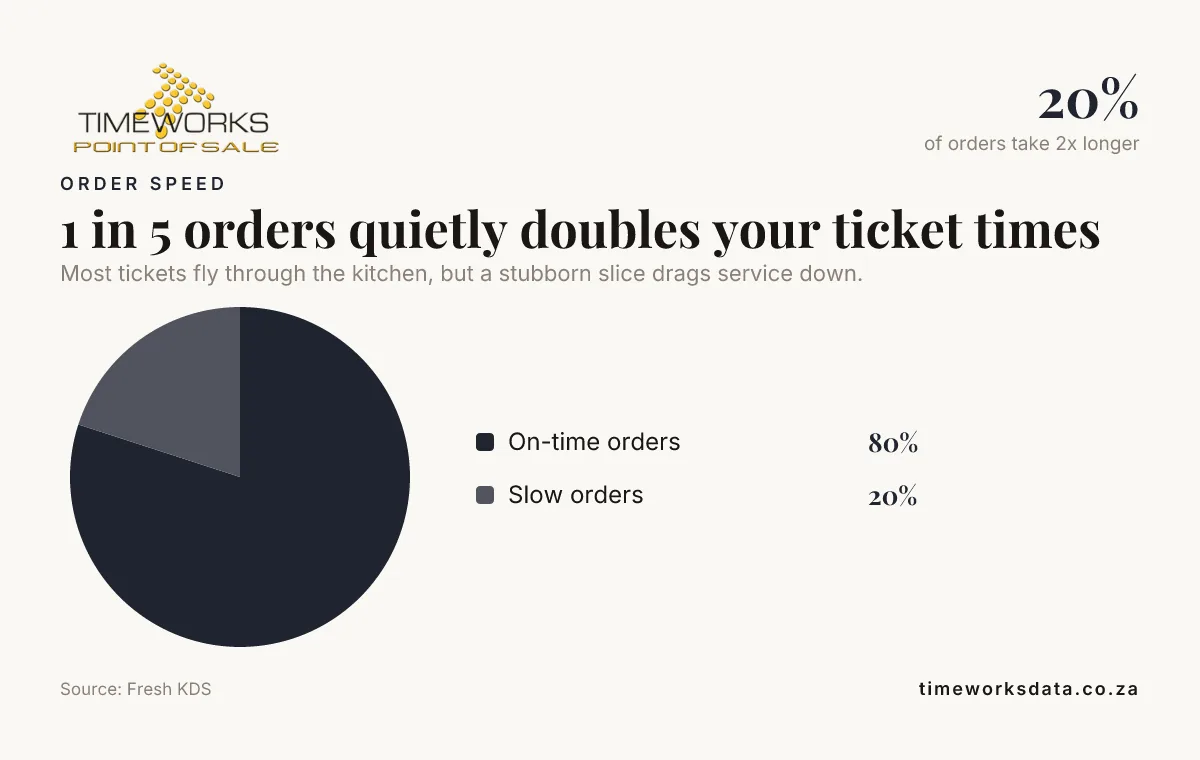
The four metrics that reveal bottlenecks
We track four core KPIs that tell you where the bottlenecks sit, and how to fix them without a messy software overhaul. The right KDS configuration translates data into action at the front of house and the back office. In 2026, the blend of real-time visibility and offline resilience keeps kitchens humming even under load, with local Cape Town support backing uptime.
Metric 1 focuses on routing speed. When orders leave the till and appear on the KDS in sub-second intervals, you eliminate confusion and reduce handoffs. TimeWorks KDS systems are designed to expedite this flow, replacing printers with a single real-time display. For venues like coffee shops, bottle stores, or wine estates, fast routing is a direct line to shorter ticket times and happier customers. POS systems Cape Town operators report fewer misreads and clearer queues when routing is optimized.
Metric 2 centres on on-time performance during peak windows. When you hit peak checkout times, every second counts. A 10% uplift in on-time performance can translate into meaningful gains in customer retention and average order values, especially in high-volume environments like fast food and QSR operations. This is where a load-shedding-ready POS and resilient hardware become a core requirement for uptime in 2026.
Metric 3 is about order accuracy. Every mis-tap or misprint creates waste and remakes. Reducing order errors by up to 40% is not just a productivity metric; it is a bottom-line safeguard. TimeWorks solutions show how structured data and central dashboards minimize errors across multiple locations, from a wine estate to a bake shop. This directly affects profitability and guest satisfaction.
Metric 4 looks at utilization. High utilization reduces idle time but can reveal bottlenecks in staffing, routing, or hardware. Utilization rates above 90% are the typical target for profitable operations, and 2026 data shows how tightening the rollout plan and aligning peripherals can lift throughput without adding complexity. This is the backbone of a quiet, dependable POS experience that lets your team focus on service, not the software.
Metric 1 in practice: routing speed and queue discipline
In busy kitchens, the delay between a till entry and the ticket appearing on the screen is the first bottleneck to address. Our TimeWorks KDS integrates with the point of sale to present orders in real time, with colour-coded statuses to guide staff. This kind of visibility helps a butchery POS or a coffee shop POS run smoother under pressure.
For retailers with multi-site footprints, centralized control means a single source of truth for price changes and menu adjustments. Digital signage and KDS together ensure consistency across locations, so you never have to chase stale information again. Learn more on our kitchen display system page and in our fast food industry guide.
Metric 2 in practice: on-time performance and guest experience
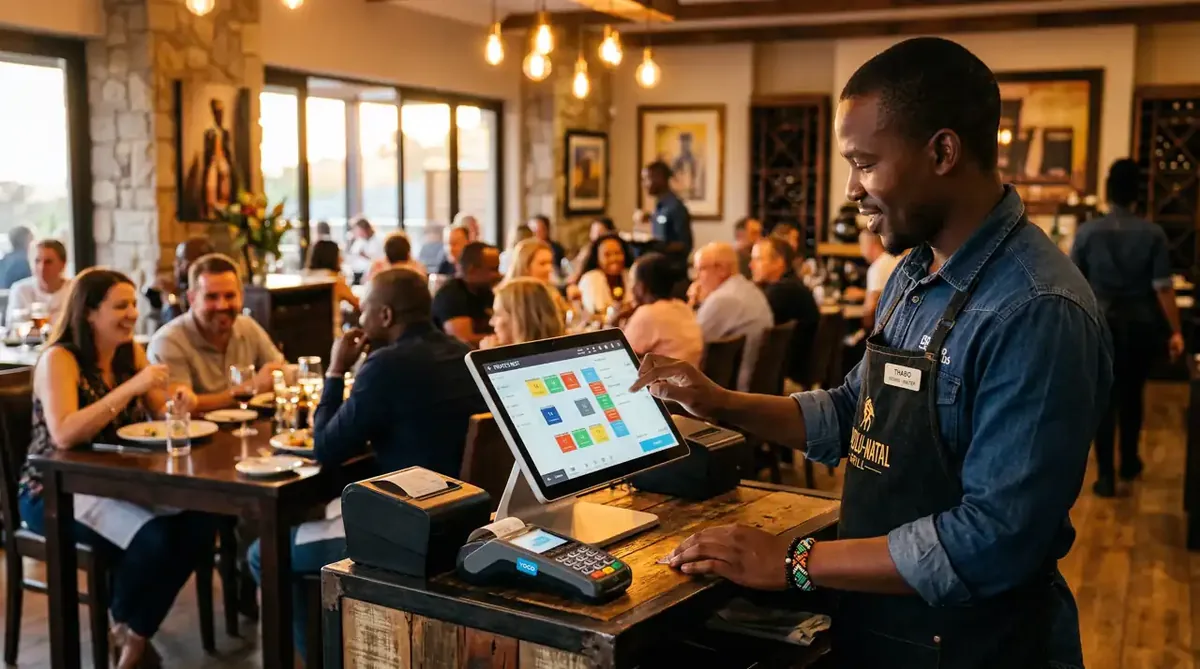
Turn times matter. We see a clear link between on-time performance and guest loyalty. When orders reach the window promised to the guest, the front of house feels calmer, and service staff can maintain higher throughput. In 2026, a 10% improvement in on-time performance compounds into tangible revenue improvements across service models, including coffee shops and bottle stores.
For fast service formats, every second saved increases seat turnover. This is where a load-shedding-ready POS and hardware built for dust and splashes prove their value. If you operate in a region with power stability challenges, you will value a system engineered to stay online and recover quickly after outages.
Metric 3 in practice: accuracy and waste reduction
Order accuracy is the guardian of margins. Reducing errors by up to 40% protects you from mis-cooked meals and remakes that erode profit and slow service. Our SQL-backed backbone provides reliable data integrity, helping back-office teams reconcile kitchen activity with front-of-house orders. This matters whether you run a kitchen for a wine estate or a fast-food counter at a cafe.
We see a clear pattern: when data is structured and accessible, managers spot bottlenecks early and keep the service flow quiet and predictable. This is the essence of a quieter interface that lets operators focus on the customer, not the software.
Metric 4 in practice: utilization and scale
Utilization is the compass that points to capacity and staffing needs. When the kitchen is running at high utilization, the bottlenecks shift from hardware to process. A target above 90% utilization is not about maxing every minute; it is about identifying where to optimize handoffs, screen routing, and peripherals to keep the flow smooth.
Whether you run a restaurant POS Cape Town operation or a bottle store POS in a wine estate, the same rule applies: align the rollout plan with the hardware and software capabilities you deploy. We will recommend the best-fit software, terminals, peripherals, and rollout plan without overwhelming you with options you do not need.
Built around time and data: a practical roadmap for 2026
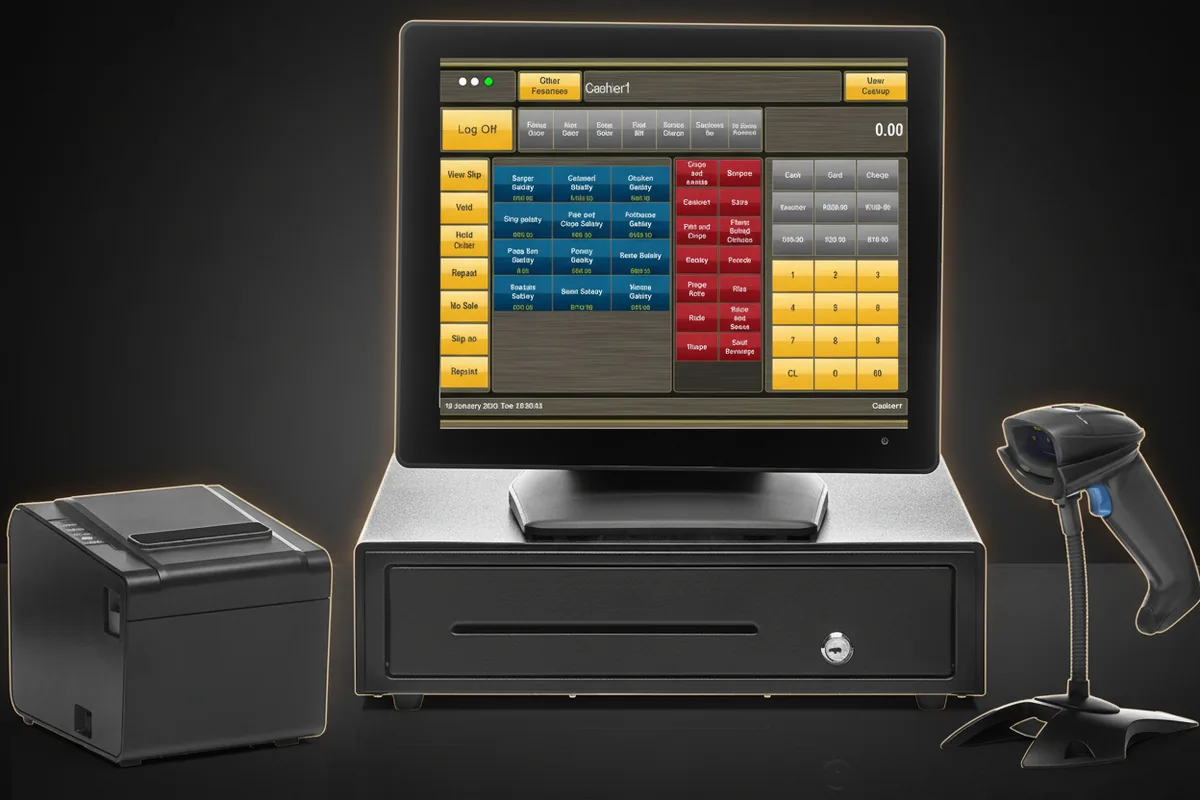
To act on these four metrics, you need a cohesive platform that combines software, hardware, and services. TimeWorks offers a complete package with local Cape Town support that shines when outages strike or the rollout expands to new locations. Surface the daily numbers that matter, keep secondary data quieter, and give managers one obvious next step. That is how you maintain uptime and service quality in a busy kitchen.
For operators in specific niches, these KPIs adapt to business models. A butchery POS case may emphasize order accuracy and stock sync, while a coffee shop POS scenario prioritizes speed and throughput during morning rushes. A bottle store POS setup benefits from centralized dashboards that highlight bottlenecks in checkout lines. A wine estate POS configuration may focus on multi-site visibility and real-time menu management across venues.
TimeWorks vs GAAP and other benchmarks
We anchor our KPIs to real operational data, not vague promises. TimeWorks vs GAAP comparisons help you understand how our SQL-backed backbone supports accurate reporting, reliable uptime, and consistent performance across sites. This is essential when you are running time-critical service windows and multi-site operations.
If you are evaluating alternatives, consider how each solution handles the four metrics in real-world conditions. A platform that only shines in theory may falter under load. Our approach emphasizes practical outcomes, backed by data from actual deployments such as kitchen display systems and industry-focused case studies.
How to implement these metrics in your venue
Start with a baseline. Gather current data on routing speed, on-time performance, accuracy, and utilization. Then map each metric to a specific operational change, whether it is a hardware upgrade, a software tweak, or a process adjustment in the kitchen workflow.
We believe in a guided approach. Let us architect your point of sale so you get a reliable, quieter interface that surfaces the numbers that matter while keeping the day-to-day operations uninterrupted. In practice, this means staged rollouts, local technicians who understand the rollout, the hardware, and the operational pressure, and a plan that scales with your business pace.
Case considerations by sector
Restaurant POS Cape Town environments demand KDS integration that does not drop a ticket between the till and the line. A butchery POS can benefit from precise stock syncing and real-time price propagation. A coffee shop POS must handle high ticket frequency with consistent speed. A wine estate POS must deliver multi-site visibility while preserving a calm front-of-house experience. All of these use cases hinge on the four metrics described above.
For retailers exploring POS rentals Cape Town or POS hardware Cape Town, the value is in a balanced blend of capability and simplicity. The quieter interface principle means staff can perform with fewer distractions, while the data backbone provides the clarity to act on bottlenecks quickly.
Conclusion
The four kitchen display metrics that reveal service bottlenecks offer a practical, data-driven path to better throughput, higher uptime, and steadier margins in 2026. By focusing on routing speed, on-time performance, accuracy, and utilization, you gain a clearer view of where bottlenecks live and how to fix them with a measured rollout plan. TimeWorks stands behind a proven backbone of SQL-backed data, local Cape Town support, and a quieter interface that helps you serve the customer, not the software. The result is reliable performance across POS systems Cape Town, restaurant POS Cape Town operations, and retail POS Cape Town storefronts alike.
Frequently asked questions
The four metrics are routing speed from till to KDS, on-time performance during peak windows, order accuracy, and utilization. Together they show where bottlenecks form and how to address them with a coordinated rollout plan.
A KDS is a key component in reducing errors by providing a central, real-time view of each order. Combined with structured data, it helps eliminate miscommunication between front-of-house and kitchen staff.
Yes. Our approach is built around a best-fit rollout plan, local Cape Town support, and a stable SQL-backed backbone. We tailor recommendations to the venue type, whether a coffee shop POS or a wine estate POS, to keep the system quiet and reliable.
High utilization highlights where bottlenecks sit in staffing, routing, or hardware. A 90%+ target is common among profitable operations, guiding you to tighten processes and optimize hardware placement rather than simply adding more staff.
Yes. Restaurants often focus on balance between speed and accuracy, while QSR and fast food models emphasize rapid routing and window timing. The KPIs adapt to service type but share the same four-metric framework for bottleneck discovery.
Visit our KDS and digital signage page and the fast food industry section to explore real-world deployments and outcomes.
The year emphasizes reliability, uptime, and real-time data flow. A load-shedding-ready POS and local support help you maintain service quality through peak windows.
See a TimeWorks KDS running in a real kitchen
Book a free demo and we will walk you through routing speed, on-time performance, accuracy and utilization on your own service model, then recommend the best-fit terminals, peripherals and rollout plan for your venue.