
3 Towns
Towns In This Region35-50 min
From Our OfficeSame Day
On-Site Support24/7
Remote AssistanceOne Estate, Four Businesses
A wine estate sells the same bottle four different ways. It leaves the cellar as bulk stock. It gets poured by the glass at the tasting bar. It goes home in a case from the farm shop. It lands on a restaurant table with a food bill attached. Four price lists, one pallet in the store room.
Split that across separate systems and the stock file stops agreeing with itself somewhere around harvest. TimeWorks runs the tasting bar, the farm shop, the estate restaurant and cellar-door case sales on one Microsoft SQL database, with a separate price list for each and one stock item underneath. A pour at the bar and a bottle sold at the table draw down the same case count.
The hospitality side gets its own tools on that database: table management, split bills and kitchen routing, so the wine list and the food close on one bill. See wine estate POS, restaurant POS and the kitchen display system.
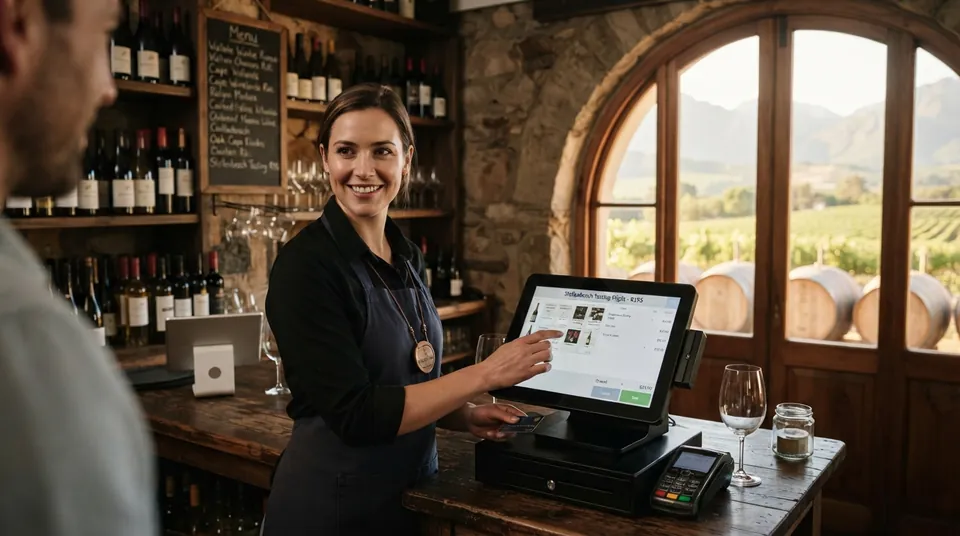
Trading When the Line Goes Down
Out in the valleys, connectivity is patchy on estate and farm roads. A fibre fault takes a farm off the network, and load shedding does the same job faster. A till that lives in a browser tab spends that time showing a spinner while a customer waits at the counter with a card.
TimeWorks writes every sale to a SQL database on the machine in front of the cashier. The sale rings up and the slip prints with the line down, and the day syncs to your reporting once the connection comes back. Stock counts and the cash-up happen on site too.
Card payments are the honest exception. Your speed point talks to your bank over its own line, and no POS changes that, so estates in the worst-served pockets keep a cash float and a 4G router on standby.
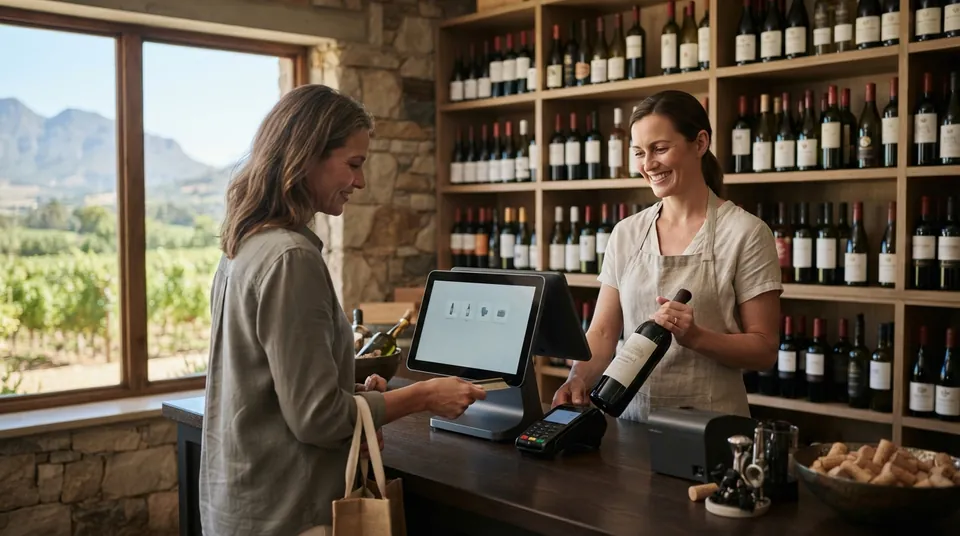
A Farm Site and a Town Shop
Plenty of Winelands producers trade in two places at once: the tasting room on the farm, and a shop on the main road in town where the walk-in traffic is. Some add a third at a weekend market.
Each site runs its own terminal and local database, and all of them report into one head office view. You change a price once and push it out. You move six cases from the farm to the shop as a transfer both sides can see, instead of phoning it through.
Month end gives you the group total and the per-site split off one report, often the first time an owner can say plainly whether the town shop carries itself. More on multi-site stock and reporting.
Harvest, Bastille and the December Run
Three towns, three trading calendars. They line up on harvest, February to April, the weeks estates push their heaviest volumes through tasting rooms and farm stalls in all three towns at once. They line up again in December, when the restaurants fill everywhere. The rest of the year they pull apart: Paarl's harvest events carry hospitality traffic through autumn, and Franschhoek fills for Bastille in July then trades hard from October to April. Trade in two of the towns and you are staffing two different years off one set of books.
A festival means three more tills than you own. We rent out terminals, card readers, printers and cash drawers on daily, weekly or monthly rental. A technician installs and configures them on site, the day before or the day of, and trains your staff at the same time. A marquee or a market stall then trades on the same prices as the farm. Pack the stall away and the takings are already in your reports. See event rentals or the full rental range.
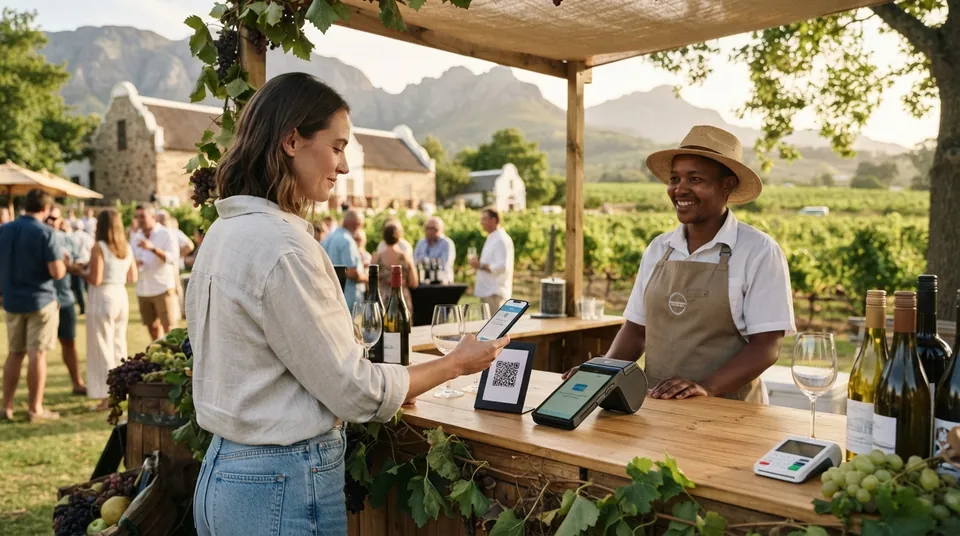
The Three Winelands Towns
Stellenbosch, Paarl and Franschhoek each trade differently. Somerset West sits in the Helderberg and Durbanville in the Northern Suburbs, each on its own trading calendar.
Support Response: Cape Winelands
35 min Stellenbosch / 40 min Paarl / 50 min Franschhoek, from PlattekloofSame-day on-site attendance covers all three towns off one run: 35 minutes out to Stellenbosch, 40 to Paarl, 50 to Franschhoek. A producer trading on a farm outside one town and in a shop in another gets both sites seen the same day, by the technician who already has the spare terminal in the van.
Questions From Winelands Operators
Industry Solutions for the Region
Winelands installs are usually a combination under one roof: a tasting room with a restaurant attached, or a farm shop that becomes a festival stall in July.
Ready to Talk POS in the Winelands?
We will come out to the farm or the shop, look at how you trade across your sites, and specify the hardware and software to match.